Water coming in, a stain on the ceiling, or tile on the ground after a storm — four different problems, one call. Free inspection, photographs of what we actually find, and an honest answer about whether you need the work.
Arizona roofs take a beating that most parts of the country never see: intense UV exposure that dries out shingles and underlayment, summer heat cycling that cracks tile and cement, and monsoon-season wind, dust (haboobs), and downpours that find every weak point in a roofing system. A small issue ignored through one more monsoon season often turns into a full interior repair.
Phoenix Roofing Experts provides prompt, honest roof repair for homeowners and businesses across the Valley. We diagnose the actual source of a leak — not just the spot where water is showing up inside — and repair it correctly the first time.
No obligation. We typically respond within one business hour.
Most people arrive at a roofer through one of these. Find yours — the right next step is different for each.
This is the one to call about immediately, and the one where doing nothing costs the most. Put something under it, move what you can, and do not get on the roof — wet tile is lethally slick and the fall is the real danger, not the water.
We can tarp it to stop the water while a proper repair is scheduled. Be clear on what that is: a tarp buys days, not a fix, and in Arizona UV it degrades in weeks. Anyone who tarps your roof and calls the job done has sold you time.
The most misdiagnosed problem in Phoenix roofing, because the stain is not under the leak. Water enters at a penetration or a failed seam, travels along the decking or a batten until it finds a nail or a low point, and comes through there. It can travel several feet.
Which is why chasing it from inside the house almost never works, and why a repair aimed at the ceiling rather than the roof fails on the next storm. The diagnosis happens up top, with photographs.
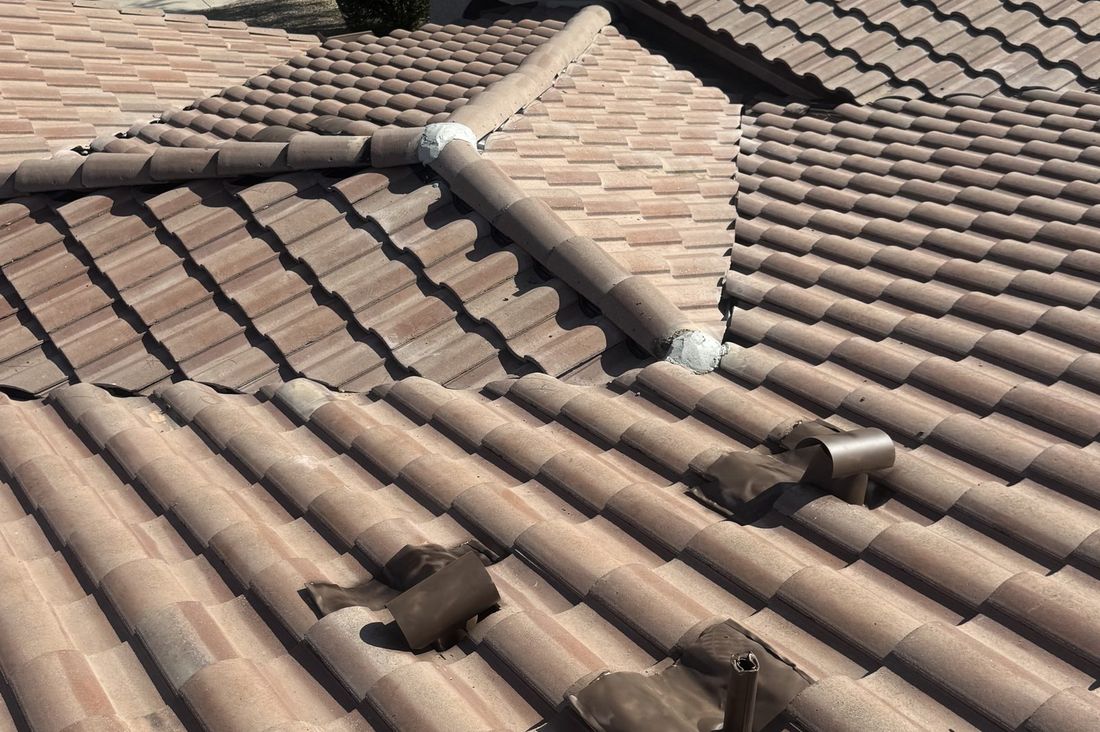
Usually after a monsoon cell or a haboob. A single tile is not an emergency — but it exposes the underlayment beneath to direct sun, and that layer is what actually keeps water out. It is a 20-to-25-year material in this heat, and UV shortens that fast.
The leak often shows up a season later, long after the tile has been forgotten. Photograph where the pieces landed before you move them — if it becomes an insurance claim, that is the evidence. If your tile profile is discontinued, that is usually still solvable with salvage stock rather than a whole new roof.
Leaks that appear in a driving monsoon and vanish for months are typically wind-driven rain getting under tile at an angle rain alone never reaches, or a flashing detail that only fails under volume. They are genuinely harder to find, and they are the ones most often patched in the wrong place.
Tell us the conditions it happens in. Which direction the wind was coming from is often the single most useful thing a homeowner can report.
If your roof has years left in it, we will tell you that instead. The inspection is free either way, and you get the photographs whether or not you hire us.
Local roofing crews and fast response times across the Valley. Highlighted cities have their own page with details on that area's housing and roof types.
Most minor to moderate roof repairs in the Phoenix area range from a few hundred dollars for a spot leak repair up to several thousand for extensive storm or tile damage. We provide a written, itemized estimate before any work begins, and there is a fuller breakdown of Phoenix market ranges on our roof cost page.
Yes, and it is worth being clear about what it is. A tarp stops water getting in while a proper repair is scheduled — it is not a repair, and in Arizona sun a tarp degrades in weeks rather than months. If someone offers to tarp your roof and leave it at that, they have sold you time, not a fix. We tarp to buy you the days needed to do the job properly, and we tell you upfront what that job is.
On its own, usually not — but it matters more than it looks. The tile is a rain shield; the underlayment beneath it does the actual waterproofing. One missing tile exposes that layer to direct UV, which is what kills it. The leak often does not appear until the next monsoon, or the one after, by which point people have forgotten the tile. Photograph it where it fell before you move it, and get someone to look at what is underneath.
Because water rarely drops straight down. It gets in at a penetration or a failed seam, runs along the decking or a batten until it finds a low point or a nail, and only then comes through the ceiling. The stain marks where it left, not where it entered. That is why chasing the stain from inside is usually wasted effort and why the diagnosis happens on the roof.
We prioritize active leaks and storm damage calls and can typically get a crew out same-day or next-day, depending on your location in the Valley and current demand after major storms.
Both. Tile is one of the most common roofing materials on Phoenix-area homes, and our crews are experienced with concrete tile, clay tile, and asphalt shingle repair.
Many storm and wind damage repairs are covered by homeowners insurance. We can document the damage with photos and a written estimate to support your claim, though coverage always depends on your specific policy.
When repairs no longer make sense, our crews handle complete tear-offs and new roof installations for homes, new construction, and commercial buildings across the Valley.
Learn more →As a residential roofing company built for the Valley's climate and HOA communities, we help homeowners repair, maintain, and replace roofs with materials suited to Arizona heat.
Learn more →We help property managers, business owners, and facilities teams protect flat and low-slope commercial roofs with minimal disruption to tenants and operations.
Learn more →Get a free, no-pressure roof inspection and written estimate from a local Phoenix roofing crew.
Call (480) 331-1017 Request Free Estimate